FALL 2026
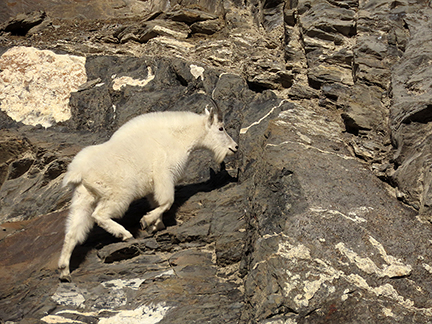
Photo from my travels: Mountain goat in Jasper National Park, Canada
Photo by Alice Henderson
LATEST PUBLISHING NEWS
THE NEXT ALEX CARTER NOVEL, DANGEROUS GROUND, IS NOW AVAILABLE FOR PRE-ORDER!
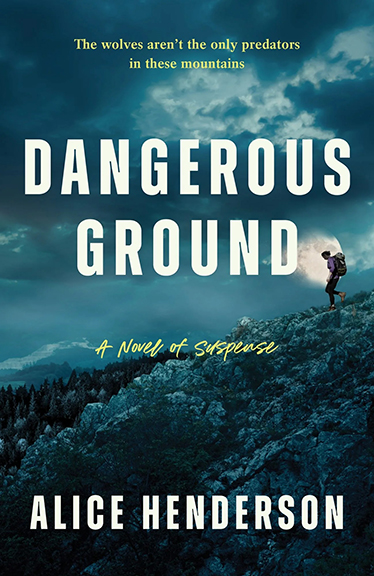
Wildlife biologist Alex Carter leads a hike through the mountains of Wyoming, where treacherous landscapes, majestic wolves, and a staggering discovery await—only for the hikers to reveal deadly motivations and shifting loyalties.
It will be available January 26, 2027 as a hardcover, ebook, and audiobook.
THE PAPERBACK VERSION OF STORM WARNING IS NOW AVAILABLE FOR PRE-ORDER!
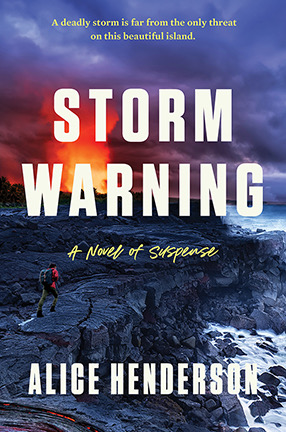
Wildlife biologist Alex Carter journeys to the Big Island of Hawaii to study endangered hawksbill sea turtles. But soon a hurricane develops, closing in on the island. Things worsen as armed men storm onto the beach, and Alex suspects that the intentions of these mysterious criminals extend far beyond the shores of the Big Island. Alex must scramble to protect the turtles, her friends, and the world at large…before irreversible damage is done.
It’s also available now as a hardcover, ebook, and audiobook, and will available in paperback on January 5, 2027.
GUEST APPEARANCE ON WOMEN BOOKS & MORE PODCAST

I had a fabulous time on the Women Books & More podcast. Irene Rawlings is a delightful host, and we talked about tuning into wildlife with specialized microphones, what it’s like to write these ecothrillers, writing for Buffy the Vampire Slayer and Star Wars, and more.
Listen wherever you get your podcasts, including Apple Podcasts, Spotify, and iHeart.
ADVANCED REVIEWERS CAN NOW ACCESS THE NEXT NOVEL, DANGEROUS GROUND, ON NETGALLEY

The next Alex Carter novel, Dangerous Ground, is now up on NetGalley and available for review by advanced readers.
These advanced reviews are very much appreciated and so important to writers, so many thanks in advance to those of you who review it.
Come adventure with Alex in the Greater Yellowstone Ecosystem! You can access the book here.
WILDLIFE IN THE NEWS
ENDANGERED SPECIES ACT FURTHER WEAKENED
In addition to revoking protections for endangered species in the Gulf of Mexico, which I wrote about in my last newsletter, several new changes to the Endangered Species Act have been implemented, weakening it even further.
The definition of what constitutes “harm” in The Endangered Species Act has been drastically reduced. It no longer includes habitat loss and destruction, the biggest cause of species extinction. Now it only includes direct harm to a specific animal, such as shooting it.
In addition, the so-called “blanket rule” has been stripped from the Act. This rule provided protection to imperiled species listed as threatened, making it illegal for people to kill, trap, or harass imperiled species while the US Fish and Wildlife Service figured out what specific steps the species needed to recover.
Often the process of developing species-specific plans takes many years, sometimes decades. Without the blanket rule protections in place, species can die out while awaiting recovery plans.
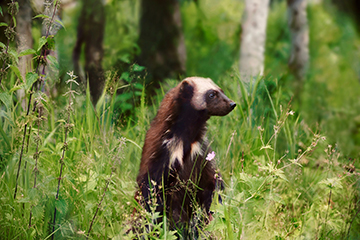
Photo of wolverine by Kristen O Karlsen on Unsplash
SPECIES SPOTLIGHT
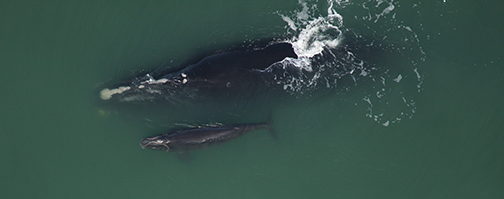
NORTH ATLANTIC RIGHT WHALE
The North Atlantic right whale is a baleen whale that lives primarily in Atlantic coastal waters. They are surface skimming whales and like to socialize together at the water’s surface. Nearly driven extinct by whalers by the 19th century, they are currently listed as critically endangered and have never recovered their numbers. Today they are at risk from vessel strikes and entanglement in fishing gear. Human-caused ocean noise interferes with their communication.
Less than 380 remain, with only around 70 reproducing females.
In order to reduce whale mortality from entanglements, fishing gear regulations need to be enacted. A rider was attached to the 2022 budget bill, delaying action on fishing gear until 2028. Since then, more than 30 North Atlantic right whales have been caught, injured, or killed. Now the House has passed H.R. 9436, which would allow this rider to continue through 2035. This delay could very well spell extinction for the North Atlantic Right Whale.
The bill is currently with the Senate.
You can help these whales by writing to your senators, encouraging better fishing practices, and driving boats slowly when you see spouts — “See a spout? Watch out.”
Photo: Researchers sighted right whale Catalog #2413 and calf four miles off Ponte Vedra Beach, FL on December 16, 2012. Credit: Florida Fish and Wildlife Conservation Commission, NOAA Research Permit #15488
INTERESTING WILDLIFE FACT
EPIC 1000-MILE JOURNEY
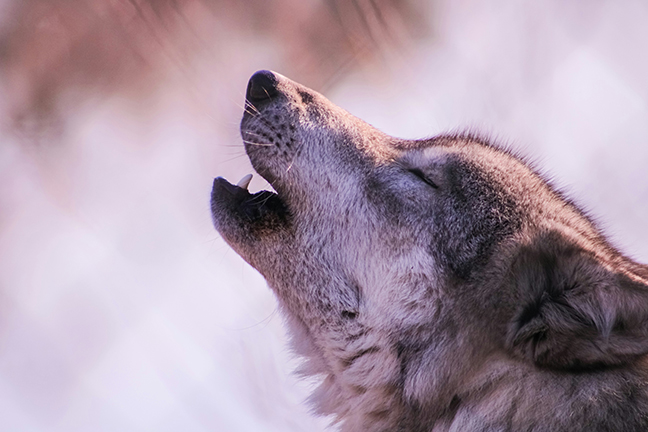
OR-7 or “Journey” was a wolf who was born in the Imnaha pack in northeastern Oregon in spring 2009. He was GPS collared by biologists two years later, and left home in September of 2011, journeying in a southwestern direction. He entered California in late December, having covered more than a 1000 miles.
He walked about 15 miles a day, passing through Lassen and Plumas National Forests. He found a mate related to the Minam and Snake River packs of northeastern Oregon and they produced pups in 2014 and 2015. Their newly formed pack was dubbed the Rogue Pack after the Rogue River Watershed where they lived.
He was the first confirmed wild wolf in southwestern Oregon since 1947 and the first in California since 1924. In response, in June of 2014, the California Fish and Game Commission voted to protect wolves under the state’s Endangered Species Act.
OR-7’s epic journey showed his resilience, adaptability, incredible problem-solving abilities. His ingenuity allowed wolves to regain some of their historical range, and his descendants to establish new packs.
Photo by Ethan Currier on Unsplash
GREEN TIP
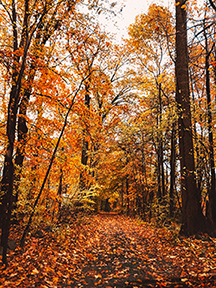
NO ACTION REQUIRED ON THIS GREEN TIP!
It’s fall! And as I’ve mentioned before, one powerful thing you can do for wildlife requires absolutely no effort on your part!
And that is to leave the leaves.
A layer of fallen leaves provides insulation, shelter, and food for a number of species including butterfly caterpillars, pollinating bees, turtles, toads, mammals, and more. This insulating layer helps wildlife survive through the cold winters.
Plus the leaves provide natural fertilization and will suppress weeds, making any gardener’s job easier.
And there are other environmental benefits, too. Raked leaves account for 13% of the U.S.’s solid waste in landfills. Because trash is compacted in landfills, it means there isn’t enough oxygen for the leaves to decompose naturally. Consequently, those leaves instead just give off methane, a greenhouse gas 28 times more potent than carbon dioxide.
And just think…you won’t have to do all that raking! You can just gaze out of your window, sipping hot chocolate, and watch the gorgeous leaves fall. (Or you can always clear a section of your yard for recreation or entertaining and leave the leaves in the rest.)
You can read more about the benefit of this practice here.
Photo by Annie Nyle on Unsplash
VOLUNTEER OPPORTUNITY
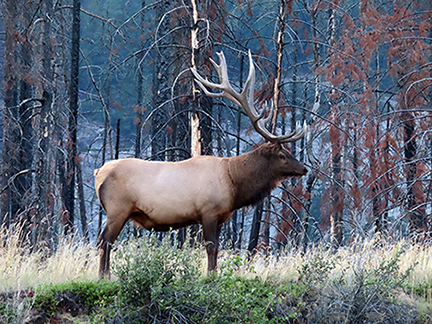
LEWIS & CLARK CAMERA TRAP SURVEY
Want to explore along the historic trail forged by the Corps of Discovery Expedition? Now you can do so from the comfort of your own home and help wildlife in the process!
Volunteers are needed to examine remote camera footage to identify wildlife species currently present along the trail. You simply look at a sequence of photos, ID the animal and what it’s doing.
It’s a simple process you can do over the internet.
You can spend as much or as little time as you have available, and will be doing your part to document modern biodiversity and see how America’s wildlife and landscapes have changed since Lewis & Clark forged their way across the West.
Click here for more information.
Photo of elk by Alice Henderson
EXPLORING THE WORLD
AROUND US
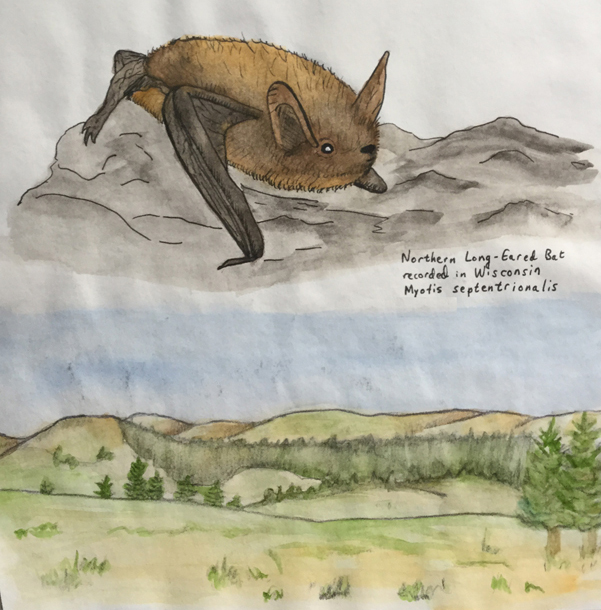
WILD WONDER NATURE JOURNALING CONFERENCE
Are you a nature journaler or considering becoming one? Keeping a nature journal is a great way to document local wildlife, flora, the seasons, or even keep track of phenological changes from year to year.
Sketching and painting allow us to slow down, to really take in nature’s sights, sounds, and scents. Whether you are an avid hiker or just want to write or sketch about what’s growing in your yard, nature journaling can help you notice new details and make astute observations.
Wild Wonder is a vibrant, supportive community of nature journalers, and every year they host a virtual conference with classes on painting, sketching, even new and inventive ways to represent maps and data in your journal.
A video pass for all of these classes comes available after the conference, so you can watch them in your own free time. Read more about the conference and how to get your video pass here.
Photo from my own nature journal (Alice Henderson)
ASTROPHOTOGRAPHY!

The Elephant’s Trunk Nebula, IC 1396, is a delightful emission nebula in the constellation Cepheus. It’s about 2400 light years away and it brings to mind all kinds of imagined shapes and creatures. Some people see an elephant with its trunk upraised.
This narrowband image I took is only part of the large nebula. Personally, I see a dragon in the upper right. What do you see?
Photo of the Elephant’s Trunk Nebula by Alice Henderson
Thank you for subscribing and reading, and I will see you next time!
If you would like to subscribe, unsubscribe, or change the address where you receive notification of Alice’s newsletter, please send an email to newsletter [AT] alicehenderson [DOT] com.
Copyright © 2026 by Alice Henderson. All rights reserved.

